宇宙創生の物理法則はなにか?- 理論・観測・実験の融合によるスケールを超えた挑戦 What is the physical mechanism of the origin of the Universe? - challenges over tran scending scales through the integration of theory, observations, and experiments

Asia/Tokyo
Koshiba hall (The University of Tokyo)

Koshiba hall

The University of Tokyo

Description

宇宙創生の物理法則はなにか?- 理論・観測・実験の融合によるスケールを超えた挑戦

What is the physical mechanism of the origin of the Universe? - challenges over transcending scales through the integration of theory, observations, and experiments

宇宙は138億歳の現在膨張し続けているが、宇宙が生まれた直後は10^-26cmよりも小さく、宇宙全体が量子の世界だったと考えられている。自然科学の究極のテーマ「宇宙創生」に挑むには,観測天文学だけでなく,極小の宇宙で主役であった素粒子,微弱な信号を最高感度で捉える量子計測技術,ビッグデータから最大限情報を引き出すAI,新たな物理法則を構築する理論の研究者の集結が必要である。日本が世界的に有する強みと今までの投資を最大限活かし,テーブルトップ実験も含めて30桁を超える実験・観測のスケールと60桁に迫る物理のスケールの統一的な理解を目指す。必然的に既存の分野を大きく超え,宇宙創生の物理法則の解明を目指す新たな学術分野を創出する。この学術変革領域のキックオフミーティングを開催する。(一般講演の締め切りは6/22といたします)

本研究会は英語で実施します。

The universe continues to expand 13.8 billion years after its birth. In its earliest moments, it is thought to have been smaller than 10−26 cm, with the entire universe existing in the quantum realm. Tackling the ultimate question in natural science -- the origin of the universe -- requires not only observational astronomy, but also the collective efforts of researchers in particle physics, which studies the fundamental constituents that governed the microscopic early universe; quantum measurement technologies capable of detecting extremely weak signals with ultimate sensitivity; AI methods that extract maximal information from massive datasets; and theoretical physics that seeks to formulate new laws of nature.

By fully leveraging Japan’s internationally recognized strengths and past investments in these areas, we aim to achieve a unified understanding spanning more than 30 orders of magnitude in experimental and observational scales, from tabletop experiments through observational cosmology, and nearly 60 orders of magnitude in physical scales. This endeavor will necessarily extend far beyond existing disciplinary boundaries and create a new academic field dedicated to uncovering the physical laws governing the origin of the universe.

This kickoff meeting marks the launch of this Transformative Research Area (A).  The primary language of the workshop will be English.

Date & Time

  • July 7 and 8, 10am ~ 6pm

Please note that the exact start and end times are subject to change.

Venue

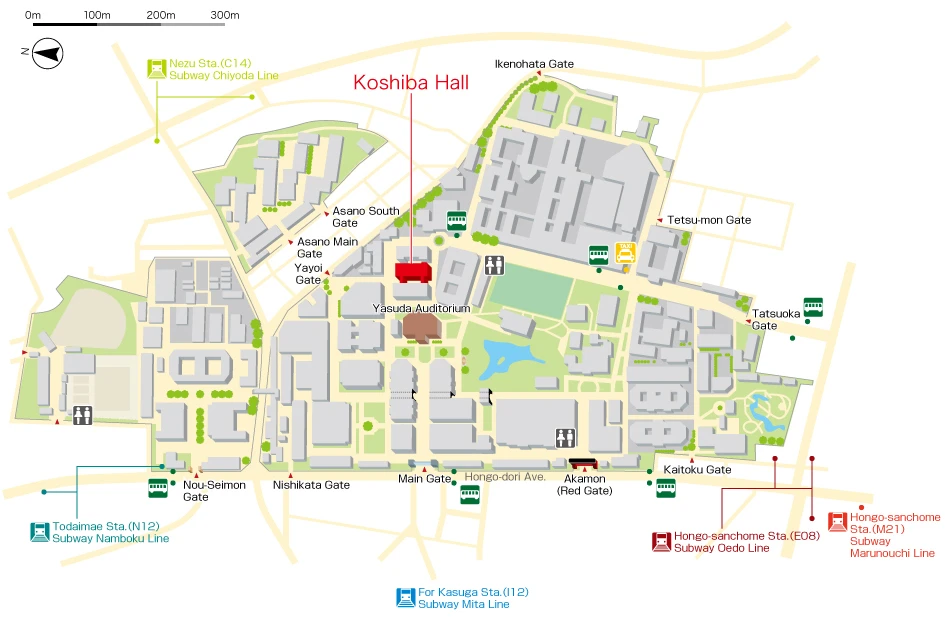
The University of Tokyo, Hongo campus, Koshiba Hall
Invited speakers / 招待講演者(敬称略)

Hidetoshi Katori / 香取秀俊(U. Tokyo/RIKEN)

Shinji Mukohyama / 向山信治(YITP/U. Tokyo) 

Yasunori Nomura / 野村泰紀(UC Berkeley/LNBL/RIKEN)

David Schlegel (LNBL) 

Registration

  • Registration is open through June 21st.
  • Registration is required for all participants, regardless of whether they attend on-site (in person) or remotely.
  • On-site participation fee: Free for students; 2,000 yen for non-students, which covers food and beverages.

Important Notes

  • The workshop will be conducted in English.
  • Both poster and contributed talk submissions are open to all participants. Please note that the number of contributed talk slots is limited.
  • Please use A0 size for posters. (If printing an A0 poster is not feasible, a smaller size is acceptable.)
  • A dedicated wireless network will not be provided. If you wish to access the internet on-site, please use eduroam (through your home institution) or the UTokyo-Guest Wi-Fi.
    Please arrange your own accommodation.


Local Organizing Committee

  • Daiki Watarai
  • Hajime Fukuda 
  • Akito Kusaka 
  • Yuta Michimura 
  • Masahiro Takada
  • Satoru Takakura

Sponsored by JSPS KAKENHI Grant-in-Aid for Transformative Research Areas (A): “What Is the Physical Mechanism Behind the Origin of the Universe? Challenges in Transcending Scales through the Integration of Theory, Observations, and Experiments.”

Participants
    • 09:30 10:00
      registration and coffee 30m
    • 10:00 12:00
      Day 1 morning
      Convener: Akito Kusaka (U. Tokyo)
      • 10:00
        Opening remarks 45m
        Speaker: Hitoshi Murayama (Kavli IPMU/UC Berkeley/LBNL)
      • 10:45
        Exploring the Physics of Cosmic Creation (Invited) 35m
        Speaker: Yasunori Nomura (UC Berkeley/LBNL/RIKEN/Kavli IPMU)
      • 11:20
        A02 Particle physics theory 25m
        Speaker: Kazunori Nakayama (Tohoku U.)
      • 11:45
        Directional Searching for Ultralight Dark Matter 15m
        Speaker: Hajime Fukuda (U. Tokyo)
    • 12:00 13:30
      Lunch break 1h 30m
    • 13:30 15:25
      Day 1 afternoon1
      Convener: Tomohiro Fujita (Ochanomizu U.)
      • 13:30
        Changing the Clock Game: From Many-Atom to Continuous Clocks Toward Compact Probes of Proper Time 35m
        Speaker: Prof. Hidetoshi Katori (U. Tokyo/RIKEN)
      • 14:05
        C01 Atomic clock 25m
        Speaker: Akio Kawasaki (AIST)
      • 14:30
        Search for ultralight dark matter with atomic clocks 15m
        Speaker: Takumi Kobayashi (AIST)
      • 14:45
        C03 Quantum sensor 25m
        Speaker: Akito Kusaka (U. Tokyo)
      • 15:10
        Axion dark matter search using quantum sensing of magnons: Research and development toward larger YIG crystals 15m
        Speaker: Yaman Singh Shrestha (U. Tokyo)
    • 15:25 15:35
      group photo
    • 15:35 16:00
      Coffee break 25m
    • 16:00 17:30
      Day 1 afternoon2
      Convener: Akio Kawasaki (AIST)
      • 16:00
        C02 Laser interferometer 25m
        Speaker: Tomohiro Fujita (Ochanomizu U.)
      • 16:25
        Recent progress of Dark matter Axion search with riNg Cavity Experiment (DANCE) 15m
        Speaker: Hinata Takidera
      • 16:40
        Antimatter and Gravity: ALPHA-g experiment at CERN 15m
        Speaker: Makoto Fujiwara (KEK-QUP/TRIUMF)
      • 16:55
        Poster flash talks 20m
    • 17:30 19:30
      Reception (poster session) 2h
  • Wednesday 8 July
    • 09:30 10:00
      Coffee 30m
    • 10:00 12:10
      Day 2 morning
      Convener: Kazunori Nakayama (Tohoku U.)
      • 10:00
        Gravity and the origin of the Universe (invited) 35m
        Speaker: Prof. Shinji Mukohyama (U. Tokyo/YITP)
      • 10:35
        A01 Cosmology theory 25m
        Speaker: Yuko Urakawa (KEK)
      • 11:00
        Simulation-based approach to the early/late universe 15m
        Speaker: Yuichiro Tada (U. Fukui)
      • 11:15
        C04 Inflation simulator 25m
        Speaker: Haruna Katayama (Hiroshima U.)
      • 11:40
        Development of a Nuclear Clock to Search for Variations in Fundamental Constants 15m
        Speaker: Sayuri Takatori (Okayama U.)
    • 12:10 13:30
      Lunch break 1h 20m
    • 13:30 15:00
      Day 2 afternoon1: Day 2 aftnoon1
      Convener: Yuki Sakurai (Suwa University of Science)
      • 13:30
        Constraints on Dynamical Dark Energy from the DESI and DES data (invited) 35m
        Speaker: Otavio Alves (Kavli IPMU)
      • 14:05
        B01 Subaru PFS 25m
        Speaker: Masahiro Takada (Kavli IPMU)
      • 14:30
        TBA (online) 15m
        Speaker: Jingjing Shi (Kavli IPMU)
      • 14:45
        HSC-Niji: a medium-band survey that opens a window for cosmology with high-redshift large-scale structure 15m
        Speaker: Hironao Miyatake (KMI, Nagoya U.)
    • 15:00 15:20
      Coffee break 20m
    • 15:20 16:20
      Day 2 afternoon2
      Convener: Masahiro Takada (Kavli IPMU)
      • 15:20
        B02 CMB 25m
        Speakers: Shunsuke Adachi (Okayama U.), Yuki Sakurai (Suwa Tokyo U. of Science)
      • 15:45
        Developing fast and accurate methods for CMB lensing 15m
        Speaker: Toshiya Namikawa (Kavli IPMU)
      • 16:00
        Closing remarks 15m
        Speaker: Hitoshi Murayama (Kavli IPMU/UC Berkeley/LBNL)