Choose timezone
Your profile timezone:
Recent observations by extensive air shower (EAS) arrays, such as Tibet ASγ, HAWC, and LHAASO, have ushered in a new era of PeV gamma-ray astronomy. The discovery of PeV gamma-ray sources and improved measurements of the cosmic-ray energy spectrum at PeV energies are driving rapid progress in both observational and theoretical studies of particle acceleration.
In the era of multi-messenger astronomy, new observational capabilities across the electromagnetic spectrum—from MeV with upcoming missions such as COSI to PeV with EAS arrays—are opening unprecedented opportunities to probe particle acceleration sites and mechanisms from complementary perspectives. One of the central questions in this context is the origin of high-energy neutrinos and how they are related to the sources of cosmic rays. Understanding how these different gamma-ray energy windows constrain the nature of cosmic accelerators and their connection to the high-energy neutrinos observed by facilities such as IceCube is essential for advancing our understanding of particle acceleration in multi-messenger astronomy.
This workshop brings together experts spanning the MeV to PeV gamma-ray energy range and multi-messenger observations to foster in-depth discussion on particle acceleration mechanisms. With a small number of selected presentations and ample time reserved for discussion, the workshop aims to encourage cross-disciplinary discussion between observations, theories, and instruments. Through these discussions, we seek to develop a new perspective on particle acceleration in high-energy astrophysics.
This workshop will be held primarily in person, as we wish to emphasize the importance of face-to-face (F2F) discussions. The program will be centered on invited talks; however, contributed talks will also be solicited. Please note that the number of slots for contributed presentations is limited.
Key topics include:
What recent observations of TeV and PeV gamma rays tell us about the diversity of cosmic-ray accelerators, such as newly found Galactic PeVatron sources, and their connection (or lack thereof) to high-energy neutrino sources
The role of upcoming observations from MeV to PeV gamma rays in multi-messenger astronomy and opportunities for synergy between COSI, CTAO, EAS arrays, IceCube, and future missions
Theoretical perspectives on particle acceleration and emission mechanisms in multi-messenger astronomy, including acceleration at shocks, jets, and outflows, and hadronic versus leptonic processes
Invited speakers with the talk titles:
Alex Kusenko (UCLA and Kavli IPMU) "A brighter future for TeV astronomy, thanks to the secondary gamma rays and neutrinos"
Ellis Owen (RIKEN/ABBL) "The Galactic Centre as a Multi-Messenger Laboratory: Prospects for Astronomical Diagnostics and Cosmic-Ray Propagation Theory"
Jiro Shimoda (ICRR/U of Tokyo) "Galactic Cosmic Rays and Diffuse Gamma-rays in Baryon Cycle of Milky Way"
Hiroki Yoneda (Kyoto University) "Opening the MeV Window: From Today's Constraints through COSI and Beyond"
Important Dates:
Scientific Organizing Committee:
Katsuki Asano, Yoshiyuki Inoue, Dmitry Khangulyan, Hidetoshi Kubo, Alex Kusenko, Tadayuki Takahashi, Naomi Tsuji, Hiroki Yoneda
Local Organizing Committee:
Katsuki Asano, Hidetoshi Kubo, Tadayuki Takahashi, Naomi Tsuji, Hiroki Yoneda
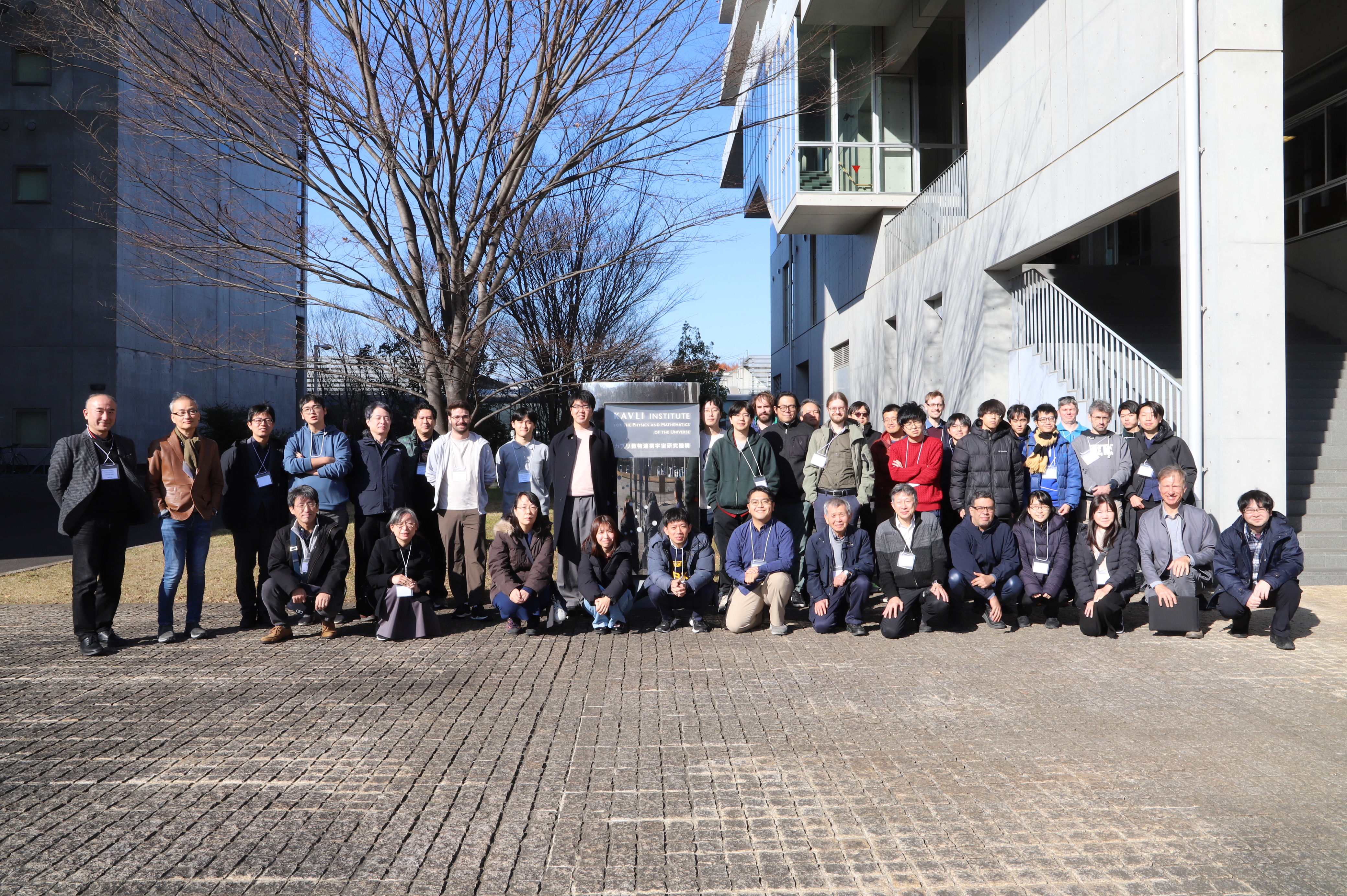
Thank you so much to everyone who took part in the workshop!